
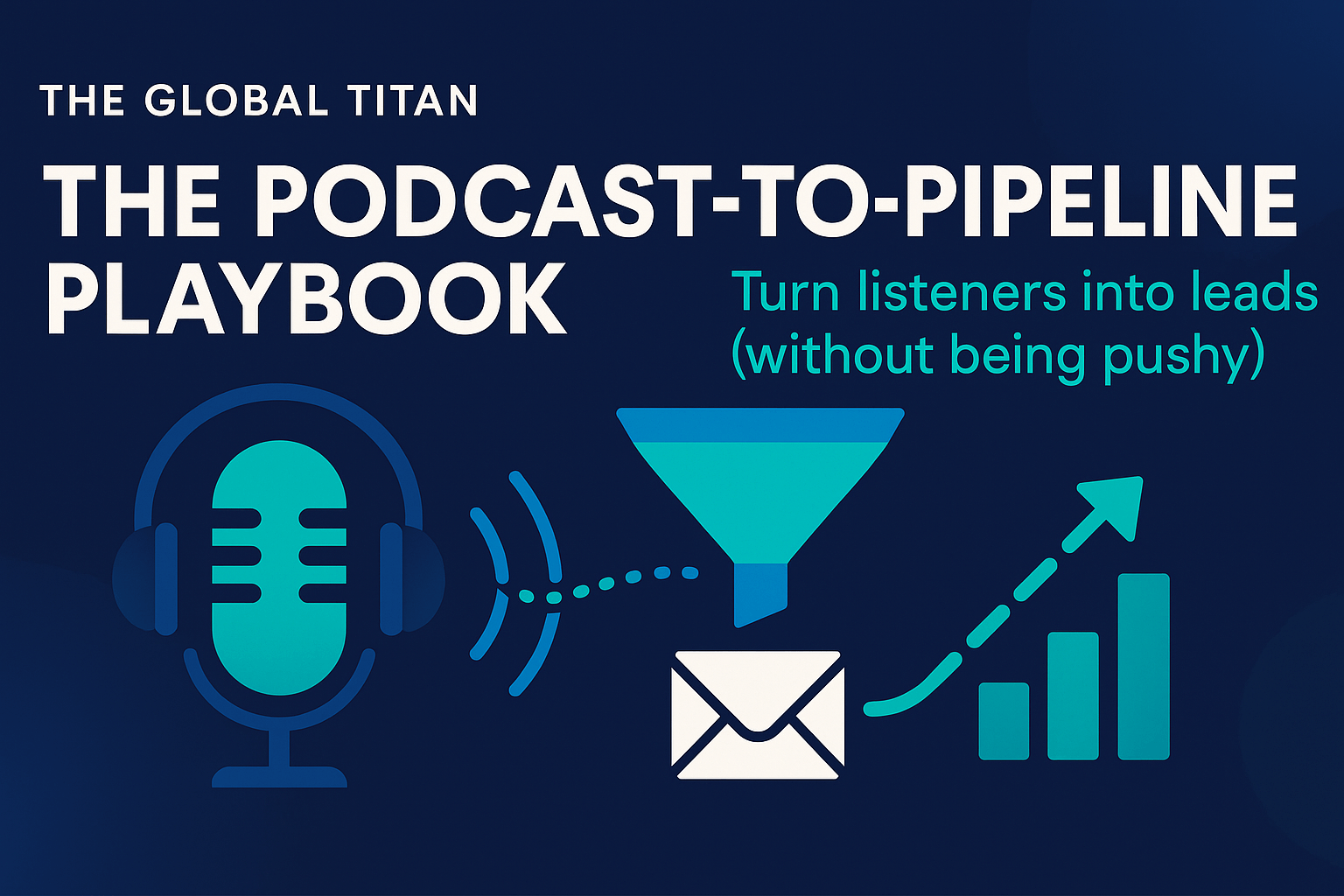
Why most shows don’t convert
Great podcasts build trust—but trust alone doesn’t fill a pipeline. The gap is usually clarity (what should the listener do next?) and friction (too many steps between interest and action).
A value-first funnel that works
1) One outcome per episode. Decide the single next step you want: download a cheat sheet, join a newsletter, or request a demo. Say it early, mid, and late, using the same phrasing each time.
2) A fast landing page. Create a short, benefit-led page tied to the episode’s topic. Keep the form to name + email (or single-sign-on) and show the deliverable above the fold.
3) Episode-native lead magnet. Offer something that extends the conversation: a template, checklist, or swipe file mentioned on-air. Relevance beats volume.
4) Tag + nurture. Tag new contacts with the episode ID. Send a short 3–5-email sequence that summarizes key moments, answers objections, and links to a case study.
5) Simple attribution. Use unique URLs per episode (e.g., globaltitan.fm/ep42) and UTM parameters so you can map leads and revenue to specific conversations.
Script your CTAs (steal these)
- “Grab the Free Episode Kit—the checklist we used today—at globaltitan.fm/42.”
- “If this sparked ideas for your team, join the Titan Brief—a 2-minute Tuesday email with playbooks and examples.”
- “Leaders who want hands-on help: book a 15-minute audit at /audit—we’ll review your funnel and send a custom plan.”
Landing page essentials
A clear headline (“Get the 6-step funnel we use on the show”), a 3-bullet value list, a tiny preview graphic, a short form, and social proof (logos, a line from a listener review). Keep everything above the fold; put FAQs and privacy below.
Make measurement effortless
- UTM on every link you read on-air.
- Episode ID in the hidden form field.
- A “Podcast” source with episode sub-channels in your CRM.
This takes an hour to set up and removes guesswork forever.